
Fifty-three years later
The last time humans traveled beyond low Earth orbit was December 1972. Apollo 17 astronaut Gene Cernan climbed back into the lunar module, becoming the last person to stand on the Moon, and humans have not ventured beyond Earth orbit since.
Artemis II is about to change that.
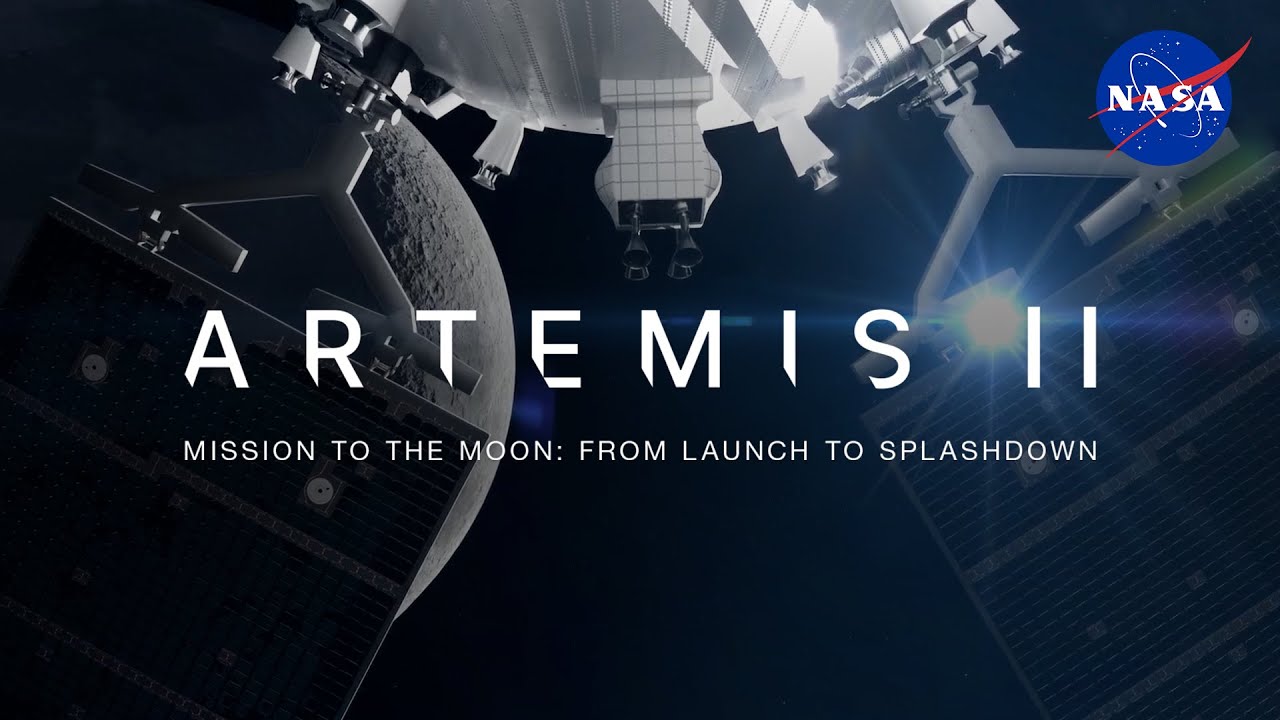
No later than April 2026, a crew of four astronauts will fly the Orion spacecraft around the Moon and return to Earth — the first crewed lunar mission since the Apollo era. They won't land, but they will go farther from Earth than any humans since 1972.
The crew
Four astronauts are making the trip:
Commander Reid Wiseman (NASA) — veteran of the International Space Station, will serve as mission commander.
Pilot Victor Glover (NASA) — will make history as the first Black astronaut to travel to the Moon's vicinity.
Mission Specialist Christina Koch (NASA) — will become the first woman to travel to the Moon's vicinity. Koch holds the record for the longest single spaceflight by a woman.
Mission Specialist Jeremy Hansen (CSA) — the Canadian Space Agency representative, and the first Canadian to fly a lunar mission.
The crew represents genuine firsts for human spaceflight. The first woman. The first Black American. The first Canadian. That's not just symbolism — it reflects a deliberate expansion of who gets to participate in humanity's next chapter beyond Earth.
What Artemis II actually does
Artemis II is a test flight, not a science mission. The primary objective is to verify that Orion and the Space Launch System (SLS) work as intended with humans aboard, before committing to the more complex Artemis III landing mission.
The flight profile:
- Launch from Kennedy Space Center on SLS
- Enter a distant retrograde orbit around the Moon (going farther than Apollo missions did)
- Spend approximately 10 days in deep space
- Return and splash down in the Pacific Ocean
The crew will test life support systems, navigation, communication, and Orion's systems under real conditions. Every data point from Artemis II feeds directly into Artemis III planning — the mission that puts boots on the Moon.
Why now
Artemis has been slower and more expensive than NASA originally projected. The SLS has faced cost overruns that have led to criticism of the program's architecture. Some analysts argue the money would be better spent on commercial alternatives.
But here's the thing: the hardware exists, the crew is training, and the political commitment is in place. Whatever you think of the cost-benefit, humans are going back to the Moon's vicinity in 2026.
The context matters too. China's lunar program is progressing, with the Chang'e missions demonstrating increasingly capable lunar exploration. The US isn't going to the Moon in isolation — this is happening in a competitive space environment that hasn't existed since the original Space Race.
Beyond Artemis II
NASA has announced a nuclear-powered Mars surface vehicle targeting 2028, and the twin-spacecraft ESCAPADE mission is en route to study Mars's atmosphere.
The Nancy Grace Roman Space Telescope launches in October 2026, expected to survey more of the universe in its first 5 years than all previous space telescope missions combined. The Roman Telescope targets dark energy, exoplanets, and infrared surveys of areas Hubble couldn't reach.
SpaceX's Starship — despite Elon Musk pushing back Mars timeline estimates by "five to seven years" to focus on lunar missions — remains the workhorse of ambition. If Starship achieves full reusability at scale, it changes the economics of everything in space exploration.
What I find genuinely remarkable
People who were born after the Apollo era — which is most people alive today — have never seen humans travel beyond low Earth orbit. The Moon missions happened before most of us existed or when we were too young to understand.
Artemis II changes that. For the first time in over half a century, there will be humans far enough from Earth to look back and see our planet as the small, fragile sphere it actually is.
That image — Earth from distance — has a way of shifting perspective. The crew of Apollo 8 called it "Earthrise." The Artemis II crew will have their own version of that moment.
Whatever the politics and cost debates around the program, that's worth something.