
Not a prototype anymore
The narrative around humanoid robots has been "wait and see" for most of the last decade. Wait for the dexterity to improve. Wait for the AI to catch up. Wait for the costs to drop.
In 2026, the waiting is over — not because all the problems are solved, but because companies have decided the current level of capability is good enough to deploy in controlled environments. 2026 is what analysts are calling mass production year zero for humanoid robotics.
Boston Dynamics Atlas: first commercial deployments
Boston Dynamics unveiled the production-ready Atlas at CES 2026, and immediately announced that all units from the initial production run are already committed. The first customers? Hyundai Motor Group manufacturing facilities and Google DeepMind's robotics research division.
The Atlas of 2026 is a fundamentally different machine from the viral backflip videos. It can be operated three ways:
- Teleoperation via VR — a human operator controls it remotely with precise haptic feedback
- Tablet-guided semi-autonomy — human gives high-level instructions, robot handles execution
- Full autonomy — for repetitive, well-defined tasks in structured environments
The key partnership here is with Google DeepMind, which has integrated its Gemini Robotics AI model into Atlas. This gives the robot the ability to reason over complex verbal instructions and adapt to unstructured situations — not just follow pre-programmed sequences.
Broader commercial orders open in 2027. The 2026 production run is fully spoken for.
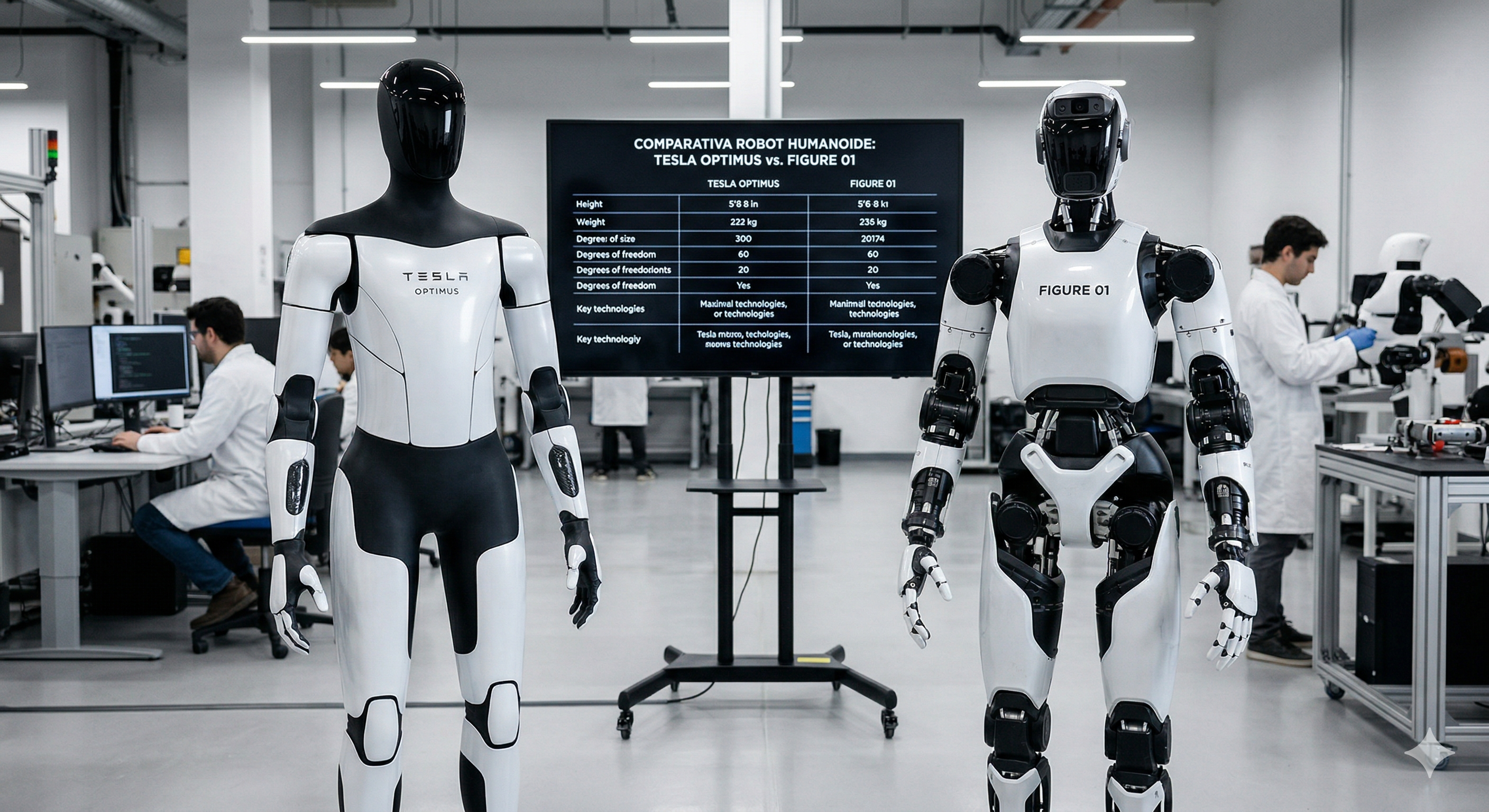
Tesla Optimus: volume is the goal
Tesla's approach is characteristically different from Boston Dynamics. Where Atlas targets enterprise quality at limited scale, Optimus targets mass production volume at accessible price.
The target price of $20,000-$30,000 per unit (at scale) would make Optimus the first humanoid robot in a price range that mid-sized manufacturers could realistically consider. Tesla is shifting Fremont factory floor space to Optimus production, targeting one million units annually at full capacity.
The honest assessment: Optimus is further behind on autonomy than Musk's public statements suggest. The Gen 3 reveal is expected this year, but reports indicate autonomous capabilities are still limited compared to what's been demo'd publicly. In the factory, Tesla robots currently require significant human supervision.
What Tesla does have: manufacturing scale, supply chain leverage, and a battery/motor ecosystem that no robotics startup can match. If anyone can solve the cost problem, it's Tesla.
Figure AI: betting on the home
Figure's 03 model has positioned differently — while Atlas goes to factories and Optimus targets industrial scale, Figure is optimizing for home environments by mid-2026.
Home use is actually a harder problem than factory deployment. Factories are structured, predictable, and can be redesigned around robot limitations. Homes are chaotic, have unpredictable humans (especially children and pets), and require social awareness that purely industrial robots don't need.
Figure's 100,000-unit ambition for 2026 is aggressive, but their autonomous capability gains have reportedly been faster than competitors in unstructured environments. The home robot market that's been "just around the corner" for 30 years might actually have its first real product.
Unitree H2: China's price disruptor
The wildcard in this race is Chinese robotics company Unitree and their H2 model, available at $29,900 — already at a price point competitors are targeting for the future.
The H2 isn't as capable as Atlas or the targets for Optimus, but it's real hardware available now at a price that research institutions and early-adopter manufacturers can afford. Unitree is sweeping the lower end of the market while Western companies argue about what the price will eventually be.
This mirrors what happened in EV manufacturing: Chinese companies moved fast on cost while Western competitors were still optimizing for performance.
What this actually means for workers
The uncomfortable question everyone's dancing around: what happens to factory jobs?
The honest answer is that it depends on the timeline. If full autonomy arrives in 3-5 years, displacement happens faster than the economy can absorb. If it takes 10-15 years — which is more likely given current capability gaps — there's time for gradual transition.
What's certain is that the nature of some physical labor jobs will change significantly this decade. The technology is no longer theoretical. The question is deployment pace and policy response.
Where I'd put my attention
If you're a developer or engineer interested in this space, the most valuable skill set right now isn't robot hardware — it's the software that makes them useful. Perception systems, task planning, failure detection, human-robot interaction interfaces.
The hardware is arriving. The software to make it reliably deployable is still the binding constraint.